


Introduction
Background information
Traditionally, college education in Japan has been conducted face- to-face. However, in March 2020, the Ministry of Education, Culture, Sports, Science and Technology acknowledged distance education as an alternative to face-to-face education as one of the measures during the COVID-19 pandemic [1]. Afterward, the return to face- to-face education was re-emphasized with the intention of promoting the understanding of students about knowledge and resolving dissatisfaction [2]. As such, discussions are ongoing with regard to the best teaching methods during the COVID-19 pandemic.
The origin of distance education can be traced to correspondence based courses, which took place via the postal service, in the 18th century [3]. In its early stages, the feeling of isolation and loss of self- motivation were regarded as problems [4]. However, in the 2000s, a few studies proposed that Web-based distance learning could be an alternative to face-to-face learning [5–7]. However, counter- arguments have emerged during the COVID-19 pandemic [8]. In other words, although the development of web-based lecture technologies is considered to exert certain educational effects on distance learning, the impact on learning given the changes in the types of education due to the COVID-19 pandemic remains a controversial issue.
Among the various types of education implemented during the COVID-19 pandemic, distance learning is a state in which teachers and students are isolated not only spatially but also temporally. In this learning format, teachers cannot coach students in a timely manner. Thus, self-motivation for learning has become a pressing issue [4].
Self-motivation for academic attainment is encouraged through beliefs concerning self-efficacy and the setting of personal goals [9]. Maintaining self-motivation during the challenging times caused by the COVID-19 pandemic can be difficult; thus, practical strategies are important for harnessing self-motivation to pursue scholarly work [10]. In distance learning, the opening period for lectures is set longer than that for face-to-face learning. Doing so enables students in distance learning to feel more freedom in terms of when and where to start learning compared with students in face-to-face learning. In other words, initiating learning without self-motivation is difficult. Therefore, this study focuses on the motivation-initiating strategies [11] immediately before learning, which is necessary for initiating learning behavior through self-motivation in relation to learning.
In nursing education, distance learning during the COVID-19 pandemic has attracted scholarly attention [12], such that reforms aimed to formulate a hybrid of face-to-face and distance learning in the future are currently underway. However, teachers must overcome many issues related to distance learning, such as learning information and communication technology [13]. Based on the abovementioned scenario, the current study focuses on self-motivation that leads to learning behavior in distance learning and elucidates the difference between students’ motivation levels for face-to-face and distance learning. This study is significant for gaining insights into the enhanced operation of distance learning during the COVID-19 pandemic.
This study aimed to elucidate self-motivation for distance learning during the COVID-19 pandemic through by comparing of motivation- initiating strategies in face-to-face learning before the pandemic and to receive suggestions for providing educational support for students.
Definition of terms
In this study, self-motivation refers to a function of distance learning or face-to-face learning that students need to maintain to achieve the level necessary for learning behavior. To exert this motivational function, motivation-initiating strategies are important [11]. It consists of five types of cognition or behavior, namely, reward for oneself (self-reward [SR]); behavior that internalizes the value of behavior (valuation [VA]); behavior that removes factors that hinder the initial onset (desire elimination [DE]); other factors specific to the self (relationship [RE]); and actions that set punishments associated with the decision on whether or not to act (punishment recall [PR]).
Materials & Method
Participants
The sample comprised students enrolled in the compulsory subject “Health Assessment” in the first year of the Faculty of Nursing, Private University School of Medicine in Japan. The subjects of distance learning were 81 nursing students enrolled in 2020 (distance learning), while the subjects of face-to-face learning were 82 nursing students enrolled in 2019 (face-to-face learning).
Survey period
The sample comprised students enrolled in the compulsory subject “Health Assessment” in the first year of the Faculty of Nursing, Private University School of Medicine in Japan. The subjects of distance learning were 81 nursing students enrolled in 2020 (distance learning), while the subjects of face-to-face learning were 82 nursing students enrolled in 2019 (face-to-face learning).
Education
This course is an exercise course that employs observation methods based on anatomical physiology. In 2019, face-to-face learning was offered, whereas distance learning was offered in 2020. The contents of the lessons for both groups were explained by the same teacher using the same slides. Lectures and exercises were given 23 times across 12 days. However, in 2020, with the outbreak of the COVID-19 pandemic, the number of exercises for the face-to-face learning was only 6, whereas the remaining 17 exercises were conducted during distance learning. The final unit for learning was distance learning. Based on the lesson curriculum and syllabus common to each year, lectures were given on the principles of genetic inheritance and genetic diversity, the practice of genetic genomic medicine, family history interviews, and pedigree-writing methods that lead to the treatment of hereditary diseases. In distance learning, a video recorded in the laboratory of the instructor was uploaded to Microsoft Stream, whereas a lesson site and a link was set up on an open-source learning management system. The viewing period was one week after the release date. After viewing, the students were instructed to input their impressions on Microsoft Foams. The viewing terminal was either a PC, a tablet, or a mobile phone. Face-to-face learning in 2020 was held once a week, whereas students in large classrooms were instructed to sit in designated seats and asked to submit a reaction paper after a lecture. The education targeted in this survey was an original unit of the university that was not covered by designated textbooks and not listed in the scope of the national examination.
Data collection
A questionnaire survey was conducted during the preparation period for the final unit. In the distance learning, responses were accepted until the last day of the lecture viewing period; the survey period lasted for three weeks and one week for the distance and face-to-face learning, respectively. The teacher-in-charge of learning administered the survey and collected the survey form. The survey request was made via video and verbally for the distance and face- to-face learning, respectively, in addition to statements regarding the objectives and method of the survey. Moreover, the students were informed about the anonymity of the survey and that the presence or absence of participation in the survey was unrelated to the results. For data collection, the distance learning used an online questionnaire using Microsoft Forms, whereas the face-to-face learning used a self- administered questionnaire. For the collection of the questionnaire from the face-to-face learning, a special box was placed outside of the classroom.
In the questionnaire, 20 items on the 5 motivation-initiating strategies [11] of the scale were developed to measure individuals’ ability to initially adjust to the intention to achieve a specific activity or goal. Since this class focused on a theme outside the standard for questions in the national examination, the study expected that learning self-motivation for acquiring general qualifications would be low in nursing practice education. Therefore, this survey determined that the scale corresponding to the situation with low learning self- motivation was appropriate for various scales of self-motivation. The questions are as follows: SR strategy [SR1–4], VA strategy [VA1–4], DE strategy [DE1–5], RE strategy [RE1–3], and PR strategy [PR1–4].
The items were rated using a 5-point scale (5 = very much so, 4 = quite so, 3 = neither, 2 = not so much, and 1 = not at all). The items for the basic attributes consist of the experience of attending education in relation to aspects such as age, gender, and the ability to read and write about genetics, which were evaluated using a 5-point scale (5 = excellent, 4 = good, 3 = regular, 2 = poor, and 1 = very poor).
Statistical analysis
After analyzing the entire data using descriptive statistics, the sample characteristics of distance and face-to-face learning and motivation- initiating were compared using the χ2 test. The relationship between the scale items was evaluated using the Spearman’s rank correlation coefficient Hemi-Matrix. In this case, ρ ≥ 0.5 was considered a correlation. The significance level was set at 1% to detect accurate differences. Furthermore, when comparing distance and face-to- face learning, the coefficient of determination was calculated for the strategies with the most different correlation tendencies, and a stratified correlation diagram was created. Statistical analyses were performed using SPSS 26.0 (IBM SPSS Japan Inc., Tokyo, Japan).
Ethical approval
The investigation conforms with the principles outlined in the Declaration of Helsinki. During the recruitment of the subjects, we included explanations that the survey was anonymous, that it was based on free will, and that the presence or absence of participation in the survey was unrelated to their grades. This study was conducted with the approval of the Clinical Research Review Committee of Tokai University School of Medicine (No. 19R004; approved on May 17, 2019).
Results
Sample characteristics
A total of 62 out of 81 students (recovery rate: 76.5%) and 39 out of 82 students (recovery rate: 47.6%) from the distance and face-to- face learning participated in the survey (Table 1). For both groups, the basic attributes of the subjects were 19 years or younger, females outnumbered the males, and the mode of genetic literacy was “regular.” In terms of age, gender ratio, and self-assessment of genetic literacy, no significant differences were observed between the two groups ( p = 0.881, p = 0.977, and p = 0.459, respectively).
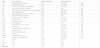
Comparison of motivation-initiating strategies (Table 2)
For each item for motivation-initiating strategies, items for the distance learning with significantly lower scores than those for the face-to-face learning are as follows: “Have a reward after learning;” (SR3; p < 0.001), “Imagine after learning” (SR4; p < 0.001), “Set a goal” (VA3; p < 0.001), “Start after resting” (DE2; p < 0.001), “Start after wanting to do something” (DE3; p < 0.001), “Start after eating” (DE4; p < 0.001), “Start after doing other things” (DE5; p < 0.001), “Learn while talking” (RE1; p < 0.001 ), “Learn while collaborating” (RE2; p = 0.001), “Learn while encouraging” (RE3; p < 0.001), “Imagine after not learning” (PR1; p < 0.001), “Image of regret without learning” (PR2; p < 0.001), and “Image to avoid becoming inferior” (PR3; p < 0.001).
Correlation between items for motivation-initiating strategies(Table 3)
In comparison within each group, the relationship between the scale items was evaluated using the Spearman’s rank correlation coefficient Hemi-Matrix. Regarding the inter-item correlation of motivation- initiating strategies, a significant positive correlation was found for all strategies in the face-to-face learning (SR; ρ = 0.605–0.742, VA; ρ = 0.541–0.776, DE; ρ = 0.323–0.721, RE; ρ = 0.537–0.747, PR; ρ = 0.317–0.690). Alternatively, the inter-item correlation of the distance learning for motivation-initiating strategies suggested a significant positive correlation for all items in the strategy (SR; ρ = 0.567–0.793, RE; ρ = 0.705–0.902), whereas a few items displayed no correlation (VA; ρ = 0.276–0.565, DE; ρ = 0.155–0.557, PR; ρ = 0.157–0.516).
Comparison of inter-item correlations between valuation strategies and punishment recall strategies (Figure 1)
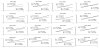
The results revealed that the level of self-motivation of the distance learning was lower than that of the face-to-face learning. Furthermore, we examine the appropriate educational support required for distance learning during the COVID-19 pandemic by investigating the difference between face-to-face learning before the pandemic and distance learning.
Discussion
The results revealed that the level of self-motivation of the distance learning was lower than that of the face-to-face learning. Furthermore, we examine the appropriate educational support required for distance learning during the COVID-19 pandemic by investigating the difference between face-to-face learning before the pandemic and distance learning.
Differences in motivation-initiating strategies
1. Self-motivation by stimulation from others
In terms of the RE strategy, the scores of the distance learning were lower than those of the face-to-face learning for all items. This result supports previous findings regarding university students during the COVID-19 pandemic recognizing that communicating with friends is difficult [14]. The students of today own mobile phones, which initially promote casual information exchange. However, during the COVID-19 pandemic, isolated learning was forced, which was similar to the start of distance education during the 1990s [4]. Thus, we infer that developing motivation is difficult because of stimuli from others. Stimuli from others is also related to the “Image to avoid becoming inferior” (PR3). This item indicated a difference between the distance and face-to-face learnings in terms of correlation with the VA strategy. In other words, a correlation was noted between PR3 and VA1, VA2, and VA4 for the face-to-face learning, whereas no correlation was noted for the distance learning. Under the valuation of learning lie contexts involving learning awareness and individual needs; there are numerous variables from social and other environmental conditions to internal thoughts and processes as well as affective responses that can initiate or alter the direction and intensity of ongoing behavior [15]. In other words, two factors influenced the VA strategy. Thus, the study showed that the results of the face-to-face learning were mainly influenced by learning consciousness and that stimuli from others strengthened the value of learning. Conversely, the results for the distance learning were considered to have been obtained by encouragement to oneself.
2. Self-motivation through the formation of career perspectives
In the PR strategy, the scores of the distance learning were significantly lower for “Imagine after not learning” (PR1) and “Image of regret without learning” (PR2). In other words, only a few behaviors motivated learning through being apprehensive about the future for the distance learning. In addition, the two items PR1 and PR2 indicated a positive correlation between PR1 and “Think about why I do something” (VA4) and PR2 and “Think of the goal” (VA2) in the face-to-face learning but not in the distance learning. The longer the duration of the role models the greater the influence on student career choice, particularly in primary cares environments [16]. The VA strategy was high for both learnings. However, the formation ofthe so-called career perspective, which is a reminder of the future self, was weak for the distance learning. This situation cannot be enhanced by linking VA and PR, which is detrimental to the maintenance of long-term valuation.
3. Self-motivation for incorporating learning into daily life
In terms of the DE strategy, the balance with regard to diet, activity, and rest in the distance learning was insufficient. In addition, for the SR strategy, enjoying after learning was difficult for the distance learning. This result overturned the original assumption. Because distance learnings were freed from commuting time, it was thought that they had time to spare. In general, educational facilities do not set the time spent on this according to their interests, but set the time without incorporating individual circumstances. In the distance learning, the boundary between activity and rest became unclear because learning time was not unintentionally divided using a timetable and chime that affected the adjustment of learning motivation.
In the distance learning, the goal setting for estimating the time spent on learning was also low under the VA strategy. In studies on home learning, homes tend to be more relaxed and slower than the college environment [17]. Scholars have also reported that distance learning takes more than 1.5 times the time set for face-to-face learning [18]. Based on these notions, we presume that the students began learning without setting the learning time and continued learning beyond the set time. Studies on distance learning report that the higher the level of learning disability, the more frequent a lecture video is paused and rewound [19]. Therefore, we presumed that determining the end of learning in distance learning is impossible because of the high value of learning and the lengthy time required for learning. Thus, striking a balance between education and life is difficult.
Educational support for distance learning during COVID-19
The challenges of distance learning include receiving inspiration from others, forming career perspectives, and incorporating learning into daily life. Therefore, as an initial form of support, we propose the formulation of lesson plans that connect students with the broader university community. This aspect is essential for promoting an increased awareness among students regarding their ideals and goals by inspiring pride and competitiveness among their friends. In addition, to facilitate the formation of a future image about themselves and foster professionalism, engaging with individuals who will become role models for students, such as senior students, teachers, and staff, is crucial. Because of the COVID-19 pandemic, restrictions have been implemented with respect to clinical training and club activities. Thus, it is equally important to create a system that can connect with the communities inside the university and outside the class as well as to create opportunities for collaboration with colleagues in the class. The subsequent form of support pertains to the control of lessons given the time allocated for learning and other activities. We aim to enable students to manage their expected learning and non-learning times. During the formulation of lesson plans, teachers must understand the time management of students in terms of, for instance, the difficulty level estimated by the students for the content of a particular lesson and how much time they will spend on a specific topic.
Limitation
This study targeted students from one nursing university, one facility, one and one unit. Thus, the study refrains from claiming that the sample is representative of learning self-motivation for other nursing students during the COVID-19 pandemic. In addition, the sample size with a recovery rate of less than 50% in the face-to-face learning is presumed to have led to the loss of students who were less prepared for learning in the face-to-face learning. For this reason, the population may have been biased in terms of learning motivation. Furthermore, the learners should be ideally assigned to two groups per year to observe their characteristics. A limitation of the research design is that the study was conducted under the constraints imposed on the lesson environment due to the COVID-19 pandemic.
Conclusion
After comparing distance and face-to-face learning, which are compulsory subjects with one credit for first year nursing college students, the five types of cognition or behavior regarding self- rewarding strategies were found to be significantly low for distance learning. The correlation between the VA and PR strategies tended to differ between the two groups. Distance learning suggested that challenges emerged in receiving inspiration from others, forming career perspectives, and incorporating learning into daily life. To support education during the COVID-19 pandemic, we encourage the creation of opportunities for active collaboration and the presentation of clear learning goals and learning processes.
Competing Interests
The funding source had no role in this study design, data collection and analysis, decision to publish, or preparation of the manuscript. The authors declared no potential conflicts of interest concerning the research and publication of this manuscript.
Author contributions
HM designed the study, searched the literature, performed the survey, did the statistical analysis, and interpreted the data, and wrote the manuscript. HJ designed the study, performed the survey, did the statistical analysis, and interpreted the data. MK designed the study, did the statistical analysis, and interpreted the data. YM performed the survey, did the statistical analysis, and interpreted the data, supervised the project, and revised the paper. BT, and UT conceptualized and designed the study, supervised the project, and revised the paper. All authors vouch for the respective data and analysis, and agreed to publish the manuscript.
Acknowledgements
All authors thank all the nursing students for their cooperation in the research.
References
- Ministry of Education. Regarding the start of learning at universities, etc. in the second year of Reiwa, (Accessed Jun 26, 2021). View
- Pregowska A, Masztalerz K, Garlińska M, Osial M (2021) A worldwide journey through distance education From the post office to virtual, augmented and mixed realities, and education during the COVID-19 pandemic. Educ Sci 11: 118. View
- Galusha JM (1998) Barriers to learning in distance education. Interpersonal computing and technology 5: 6-14. View
- Woo K, Gosper M, McNeill M, Preston G, Green D, et al. (2008) Web-based lecture technologies: blurring the boundaries between face-to-face and distance learning. ALT-J 16: 81-93. View
- Gosper M, McNeill M, Phillips R, Preston G, Woo K, et al. (2010) Web-based lecture technologies and learning and teaching: a study of change in four Australian universities. ALT-J 18: 251-263. View
- Khatony A, Nayery ND, Ahmadi F, Haghani H, Vehvilainen-Julkunen K (2009) The effectiveness of web-based and face-to-face continuing education methods on nurses' knowledge about AIDS: a comparative study. BMC Med Edu 9: 41. View
- Foo CC, Cheung B, Chu KM (2021) A comparative study regarding distance learning and the conventional face-to-face approach conducted problem- based learning tutorial during the COVID-19 pandemic. BMC Med Educ 21: 141. View
- Zimmerma BJ, Bandura A, Martinez-Pons M (1992) Self-Motivation for Academic Attainment: The Role of Self-Efficacy Beliefs and Personal Goal Setting. Am Educ Res J 29: 663-676. View
- Whitfield KM, Dresser JD, Magoffin R, Wilby KJ (2021) Maintaining and maximising motivation to progress scholarly work during challenges times – Reflections from the pandemic. Curr Pharm Teach Learn 13: 193-197. View
- Akama K (2015) Development of the scale of motivation initiating strategy (in Japanese). Jpn J Psychol 86: 445-455. View
- Japan Nursing University Council. Response to quality assurance of education and securing of graduates at nursing universities due to the spread of new coronavirus infection (confirmation and request). (Accessed Jun 26, 2021). View
- Webb L, Clough J, O'Reilly D, Wilmott D, Witham G (2017) The utility and impact of information communication technology (ICT) for pre-registration nurse education: A narrative synthesis systematic review. Nurse Educ Today 48:160-171. View
- Singh S, Roy D, Sinha K, Parveen S, Sharma G, et al. (2020) Impact of COVID-19 and lockdown on mental health of children and adolescents: A narrative review with recommendations. Psychiatry Res 293: 113429. View
- Wulf G & Lewthwaite R (2016) Optimizing performance through intrinsic motivation and attention for learning: The OPTIMAL theory of motor learning. Psychon Bull Rev 23: 1382–1414. View
- Stagg P, Prideaux D, Greenhill J, Sweet L (2012) Are medical students influenced by preceptors in making career choices, and if so how? A systematic review. Rural Remote Health 12: 1832. View
- Canas JJ, Nelson DL (1986) Recognition and environmental context: the effect of testing by phone. Bull Psychon Soc 24: 407-409. View
- Mitoma H, Harada Y, Yamazaki Y, Uchida K, Igarashi R, et al. (2020) Is learning in classroom superior to learning distance? (in Japanese). Med Educ 51: 266-267. View
- Ohkawauchi T, Ohtani J, Yonemura S, Tokunaga Y. (2012) Study of estimating learners’ subjective impressions on difficulties by their learning behaviors for e-learning distance systems (in Japanese). JSET 36: 193-203. View