


Background
By 1979, when the civil war ended, the education and economy of Cambodia experienced a slump, the country lost its governance, and many people lost their normal lives. In particular, children’s health problems continue today because of poverty and a lack of learning opportunities. It has been reported that nutritional disorders in children still affect them 40 years after independence [1, 2].
Previous studies have pointed out that children’s health problems include the physical disparity between children in the capital and suburbs and the coexistence of obesity and thinness. This is an issue not only for Cambodia but also for some countries in Southeast Asia [3-6]. Most of the reports of these previous studies were carried out as part of the support activities in Cambodia using cross-sectional survey methods. In addition, there is currently no system in place for the Cambodian government to observe children’s health longitudinally. Given this situation, data such as school health examinations that provide indicators of improvement are needed to improve children’s health. However, as of 2016, no school health checkups have been conducted for children.
The Cambodian government formulated the school health policy in 2016 and proposed that the policy focus on preventing infectious diseases and providing hygiene education. However, although the model school in the capital progressed, promoting school health, especially in suburban areas, was postponed because of the delay in the development of public transportation and the economic disparity between the capital and suburban areas. Therefore, in 2017, Team Cambodia in Japan began promoting a local school health room system [7] and a model project for school health examinations [8]. In addition, Team Cambodia’s proposed school health system was incorporated in the revised version [9] of the school health policy in 2019. Subsequently, on September 21, 2021, when the school reopened after the pandemic, the Cambodian government announced the establishment of a school health room based on the model proposed by Team Cambodia. As a result, it will be installed in all schools, from public and private elementary schools to universities nationwide.
Therefore, to evaluate the quality of the school health room in Cambodia in the future, it is necessary to evaluate the adaptation of the social environment of the school health room system in Cambodia, which consists of a transfer of Japanese-style technology.
Research Objective
The purpose of this study was to evaluate the adaptation of the social environment of the Cambodian school health room system model, which consists of a technology transfer of the Japanese school health room system, and to contribute to the evaluation of the quality of the Cambodian school health room in the future.
Methods
Research design
This study used a hypothesis-verification design. We hypothesized that the Japanese school health room system was socially and environmentally adaptable in Cambodia.
Definition of terms
The Japanese-style school health room system manages the health of teachers and children by arranging school health teachers who do not teach or evaluate in Japanese schools in the school health room. The role of the school health teacher is not a school nurse but rather a provider of first aid, such as treatment for injuries, health activities such as observation of sick children, provision of health information, and management of the hygienic environment of the school. This role also supports children’s mental counseling.
The exportable Japanese school health room system model includes school health facilities, school health teachers, health information management methods such as health checkups, and manuals and records regarding children’s conditions and responses. This study included school health room standards, visitor records, health room equipment management books, symptom observation tables and records, health diagnosis records, and a list of collaborative institutions.
Target
The target was a set of Japanese-style school health room models implemented by Team Cambodia of University A. The set consisted of Cambodian school health room standards, visitor records, a health room material management sheet, symptom observation items, a flow sheet of the school health teacher’s response, and health checkup records.
Data collection
Team Cambodia collected data at public model elementary schools in Kandal Stueng District, Kandal Province, by observing maintenance status, usage status, usage history, and actual data.
School Health Room Standards in Cambodia
We verified the validity of the school health room standard in Cambodia using the following procedure. First, Cambodian government officials, state and county officials, principals of public elementary schools in the suburbs, and health room teachers visited Japan to receive training and to observe the facilities and functions [10]. Subsequently, these individuals after returning to Cambodia from the schiil health training in Japan and built a health room area and a health room in the library [11, 12]. Next, Team Cambodia members compared the Cambodian school health rooms with those of Japan, examined indispensable materials that should be installed in the Cambodian school health room, and verbalized the standards for quality assurance of the school health room. Team Cambodia is composed of a group of school health technical supports for Cambodia at A University in Japan. The criteria were as follows.
1. Staff members in charge of the health issues of school children and teachers should be assigned. The principal should be a responsible representative.
2. Schools should give suitable first aid treatments to school children in case of injuries or abnormal physical symptoms. 3. Schools should establish school health rooms to suitably manage children’s health information and provide suitable care to children complaining of health problems.
4. Children with health problems can have a temporary rest with peace of mind and/or receive first aid treatments in the school
5. The school health room should be kept quiet and provide clean beds and first aid kits. Children should be isolated from the surrounding noise and/or pollution.
6. Assigned staff members should collect children’s health information regularly, at least once a year. The collected information should be suitably shared with their parents to monitor the children’s growth.
7. Health information on growing children should be recorded continuously and linked to the governmental organizations to be used as national health indicators.
Visitor records
In Japan, it is necessary to grasp the utility value and the actual situation of the school health room; thus, the records of the children who visit the school health room are taken. A record sheet was created with the date, name, purpose of visit, and corresponding items, referring to the visitor record in Japan.
Health room material management sheet
The items necessary for the health room were determined by considering the current situation of the Cambodian school health government staff who trained in Japan, as mentioned in (1), and the suburban school where the school health room was opened locally. A form was created to conduct regular health room inspections.
Symptom observation sheet In the school health room in Japan, observation records of sick children visiting the school health room are created. These records are necessarily used for inquiries made by parents and external medical infirmaries.
Collaborative organization
The school health room may ask sick children to attend a medical infirmary or use an ambulance in an emergency. It is also necessary to post information such as school doctors related to school health checkups. These must be included in the school health room system.
Health diagnosis record
The Cambodian government created a provisional sheet, but it was not used. This was compared with Japan’s school health checkup record and reorganized to create the school health checkup record sheet in Cambodia.
Analysis method
Multiple researchers will observe the local situation and empirically examine whether the initial purpose has been achieved, whether there are any points to be improved and the remaining issues.
Ethical considerations
Because this study did not include human research subjects, it was not subject to ethical review.
Research period
We conducted this study from November 2017 to February 2020.
Results
We applied the Cambodian school health room standards, visitor records, health room material management sheets, symptom observation items, collaborative organizations table, and health checkup records locally.
School health room standards
The school health room established by transferring the technology of the Japanese school health room to Cambodia is shown below.
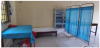
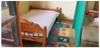
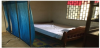
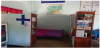
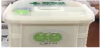
Figures 1–4 show the school health room opened in an empty classroom. The bed has white sheets, a desk for the health teachers’ records, a blindfold screen, and storage. The project of Team Cambodia provides white sheets and screens.
In addition, a health teacher who could provide first aid and medical materials for first aid (Figure 5) was installed in the school health room. University A planned a local seminar for health teachers and conducted practical exercises such as resuscitation, injury treatment, and symptom observation.
Visitor record
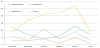
The visitor record was recorded by the school health room teacher. Team Cambodia developed a model of the recording form used in the school health room of the local school. The items on the form included date and time, name, gender, age, chief complaint, response, consequences, remarks, and so forth. The Khmer language was used, which allowed information to be shared. In addition, when the visitor records were tabulated after half a year, we confirmed that the number of children in poor physical condition in the health room increased during the hot season before the Khmer New Year, as shown in Figure 6.
School health room equipment management sheet
A well-ventilated school health room area, a set of beds, pillows, blankets, screens, desks, chairs, recording form, and first aid kits were deployed as the first step in the school health room model. Because theft and destruction of school health room equipment have often occurred, we decided to regularly check the status of these items (Figure 7).
Symptom observation items
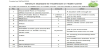
We created standard observation items for observing children who presented to the school infirmary. Having an objective observation item and the child’s chief complaint allowed for grasping the child’s overall condition (Figure 8).
Behavior flow chart of school health room teachers
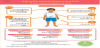
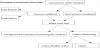
When a child arrives, the teacher in charge of the school health room observes along with the flow chart, provides instructions for rest, contacts parents, provides first aid, and finally inquires with a medical institution (Figure 9).
Health checkup record
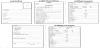
After comparing the items of the child’s notebook draft prepared in Cambodia and the draft by Team Cambodia, the children’s school health checkup record sheets were finally confirmed by the government school health officer.
Because the child’s handbook prepared in Cambodia did not have the date of birth, family structure and relationship, birthday record, dental/internal health checkup, height/weight curve, obesity curve, or education consultation record, the government approved Team Cambodia’s additions. In addition, the items deleted in the children’s notebook from the school health checkup were reflexes, genitals, and venereal diseases (Figure 10).
Discussion
On September 21, 2021, the Cambodian government notified schools nationwide to set up school health rooms for the reopening of schools after the pandemic. The standards for school health rooms were similar to those of Team Cambodia. The total number of children in Cambodia is on the rise, and thus, there are not many vacant classrooms in the schools. In addition, because classrooms have dirt floors and the windows are not sealed, dust can be seen in the classroom. Therefore, local principals created a clean area in the corner of the clean library room and used it as a school health room. These rooms included a bed covered with white sheets, as the screening was effective when the child was at rest.
In addition, the principals who received school health training in Japan instructed children to clean up. As a result, the school health room must be kept at a certain level of cleanliness. However, children wear sandals, and there is a shortage of hand-washing areas; thus, a foot-washing area was also necessary. The visitor record was enthusiastically recorded. From the record, we observed many children who became sick due to the heatwave in March before the Khmer New Year. For this reason, parents must be reminded to pay attention to their children’s health in March. Although such alerts must be given to parents, there is a need to develop news for parents in the future because of the lack of parental cooperation.
The equipment in the school health room in the model district was first maintained with a donation from Team Cambodia. A shortage of school funds occurred in 2021; thus, government measures are expected. Therefore, washing and replenishing linens to maintain their cleanliness will be an issue that must be addressed in the future.
The symptom observation record describes the child’s complaint items, such as general headache and abdominal pain. Because the record is written in Khmer so that children who attend the school health room can read it, it can also be used to provide explanations to the children.
The teacher in charge of the school health room observes when the child comes to the room and decides what to do. The standard flow was shown in the chart so that inexperienced health teachers could decide their own actions based on this flow chart. This chart makes it clear to the teachers what they can and cannot do in the school health room.
We examined the school health checkup records as follows. Cambodia’s ready-made school health record sheet was prepared in accordance with the 2016 School Health Policy. Among the observation items of the children in the record, some items, including reflexes, genitals, and venereal diseases, are difficult to record at school; therefore, these items were considered to require care at a medical institution by the parents. On the other hand, family information and birthdays are important information. However, in Cambodia, these data were not collected because, until recently, the child’s birthday was not recorded accurately. Currently, the birthday is clarified by submitting a yellow card at admission.
Team Cambodia added these necessary items in the model version. The other item for which the model version differs from the ready-made recording form was the time-dependent record of the dental and internal medicine school health checkups. School health checkups have not been conducted in Cambodia, and school health room teachers have not yet been assigned nationwide; however, if school health teachers are assigned due to the future development of the school health room, it will be necessary to proceed with school health checkups.
Therefore, from November to December 2019, Team Cambodia conducted a model project for school dental and internal checkups in Phnom Penh and the suburbs. The implementation of school health checkups in the training of health teachers is an issue for the future.
Conclusion
The contents of the school health room system proposed by Team Cambodia have been adapted to the social environment of Cambodia and put into local practical use. From there, the issues became clear, and it is necessary to proceed with solutions in the future.
Acknowledgments
We would like to express our gratitude for this research, supported by the Japan International Cooperation Agency Grassroots Technical Cooperation Project. We would also like to express our thanks for the implementation in collaboration with the Ministry of Education, Youth and Sports of Cambodia.
Competing Interests
The author declare that there is no competing interests regarding the publication of this article.
References
- UNICEF (2019) World Children’s White Paper. View
- UNICEF (2020) Obesity and undernutrition two challenges for Asian children both countries are on the rise, pointed out in joint reports by UNICEF and others. View
- Le Nguyen BK, Le Thi H, Nguyen Do VA et al. (2013) Double burden of undernutrition and overnutrition in Vietnam in 2011: results of the SEANUTS study in 0·5-11-year-old children. Brit J Nutr 110: S45-S56. View
- Sandjaja S, Budiman B, Harahap H, Ernawati F, Soekatri M, Widodo Y, et al. (2013) Food consumption and nutritional and biochemical status of 0·5-12-year-old Indonesian children: the SEANUTS study. Brit J Nutr 110: S11-S20. View
- Rojroongwasinkul N, Kijboonchoo K, Wimonpeerapattana W, Purttiponthanee S, Yamborisut U, et al. (2013) SEANUTS: the nutritional status and dietary intakes of 0.5-12-year-old Thai children. Brit J Nutr 110: S36-S44. View
- Poh BK, Ng BK, Siti Haslinda MD, Nik Shanita S, Wong JE, Budin SB, Ruzita AT, et al. (2013) Nutritional status and dietary intakes of children aged 6 months to 12 years: findings of the Nutrition Survey of Malaysian Children (SEANUTS Malaysia). Brit J Nutr 110: S21-S35. View
- Shimizu H, Yamaguch M, Yamamoto M, Uehara H, Yoda T, et al. (2020) Evaluation of seminar after that Cambodian officials and teachers who participated in school health training in Japan II. Nursing Journal of Kagawa University 24: 43-52. (in Japanese) View
- Ryo M, Aya M, Minoru M et al. (2020) Technical training project for school health examination in Cambodia. Journal of Kagawa University International Office 12, 39-44.
- Ministry of Education, Youth, and Sports in Cambodia (MoEYS) (2019) School health policy.
- Shimizu H, Toge T, Watanabe K, Tokuda M (2018) Evaluation of Kagawa University Health Education Program in Japan for government officials and primary school teachers of Kandal Province in Cambodia, Research Review of Education Reserch Center for Lifelong Learning Kagawa University 2: 23- 42. (in Japanese)
- ShimizuH, Yamaguchi M, Ymamoto M, Uehara H, Yoda K, et al. (2019) Evaluation and issues of post-return seminars for Cambodian government officials and teachers who participated in school health training in Japan. Nursing Journal of Kagawa University 23: 59-70. (in Japanese)
- Miyamoto K, Noda H, Kurayama K, Ymaguchi M, Shimizu H, et al. (2019) Post-return training and evaluation of teachers from primary schools of Kandal Province in Cambodia who attended the school health training in Japan: activity report by the 5th Teaching Travel Group, Research Review of Education Reserch Center for Lifelong Learning Kagawa University 24: 31-43. (in Japanese)