


Introduction
Nursing students entering mental health clinical settings often experience anxiety, uncertainty, and hesitation when caring for individuals with mental health conditions. These emotional responses are commonly associated with concerns about unpredictable behaviours, communication challenges, fear of making clinical errors, and stigma surrounding mental illness, which may negatively affect students’ confidence and learning experiences during clinical placement [1-3]. In addition, nursing students frequently report feeling underprepared to communicate therapeutically with individuals experiencing mental illness, particularly when navigating sensitive conversations and complex emotional interactions [4]. Collectively, these challenges may contribute to reduced confidence and difficulties engaging effectively within psychiatric and mental health clinical environments.
Simulation-based education has been widely recognized as an effective pedagogical approach for reducing anxiety and improving clinical preparedness in nursing education [5, 6], particularly in mental health nursing clinical preparation [4]. In particular, the use of standardized patients (SPs) provides learners with opportunities to engage in realistic clinical encounters in a safe and supportive environment [7]. Recent evidence demonstrates that SP based simulation enhances communication skills, clinical reasoning, and student confidence while reducing anxiety prior to clinical practice [8]. Systematic reviews in nursing education further support simulation as a high-impact strategy for developing clinical competence and learner self-efficacy [9]. Similarly, qualitative findings suggest that SP encounters promote self-awareness, challenge misconceptions, and support the development of therapeutic communication skills in mental health nursing education [10].
Best practice literature in simulation education emphasizes the importance of structured design elements, including pre-briefing, psychological safety, case realism, and guided debriefing to maximize learning outcomes [11]. However, despite growing evidence supporting simulation in nursing education, there remains limited detailed description of how SP based Mental Status Examination (MSE) training is designed, implemented, and integrated within undergraduate mental health curricula. In addition, fewer studies provide transparent descriptions of simulation design processes, including preparation, SP training, and structured debriefing strategies aligned with established simulation standards.
To address this gap, an MSE simulation using SPs was integrated into a third-year mental health nursing course within a Bachelor of Science in Nursing (BScN) program. The purpose of this paper is to describe an educational innovation in which SP based simulation was used to support students’ learning of the MSE, including pre- simulation preparation, case development, SP training, simulation delivery, and structured debriefing. Student feedback on the learning experience is also summarized to inform future refinement of the teaching strategy. This paper is presented as a descriptive report of an educational innovation in nursing education.
Educational Innovation Design and Implementation
Learning preparation and pre-simulation briefing
The simulation aligns with the constructivist worldview of learning [12] and experiential learning theory [13]. Both emphasize that learners actively construct knowledge through active experimentation and reflection rather than passively receiving information. As this was classified as an educational innovation initiative, it was exempt from the university’s Research Ethics Board review.
The learning experience was delivered over two consecutive weeks, with each student participating in a total of three hours of simulation- based learning. In the first week, a 1.5-hour lecture supported by PowerPoint slides introduced the components of the Mental Status Examination MSE, including appearance, behaviour, mood and affect, speech, thought process, cognition, and insight. Interview strategies and sample questions were discussed, and video examples were used to demonstrate clinical encounters with individuals presenting with a range of mental health conditions. Learning resources, including lecture slides, an MSE handout, sample interview guides, and selected readings, were made available on the learning management system prior to the lecture to support student preparation.
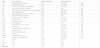
A structured pre-briefing session followed the lecture to clarify expectations and simulation objectives (Table 1). Emphasis was placed on confidentiality, respect, psychological safety, and teamwork. Students were informed that the simulation was a safe learning activity and not an evaluative exercise. Due to logistical and budget constraints, students participated in clinical groups of six to seven members. Groups were encouraged to also review therapeutic communication, previously taught materials collaboratively and prepare their interview approach in advance.
Case Development and Standardized Patient Preparation
Two case scenarios were selected and adapted from an existing case bank to align with course learning outcomes, with a specific focus on the MSE. Each case included a detailed SP script outlining clinical history, behavioural presentation, and expected emotional responses to support realism and consistency across groups. SPs were recruited from an established simulation program at another university and trained jointly by the simulation coordinator and course instructor. Training included orientation to the MSE structure, case expectations, and communication boundaries. SPs were also prepared to maintain psychological safety while supporting student learning through prompts when necessary ensuring the interview maintained a natural flow. To enhance authenticity, SPs were asked to dress in alignment with their assigned clinical presentation, reflecting realistic patient portrayal within mental health settings. For instance, the SP portraying psychosis wore multiple mismatched clothing layers, reflecting disorganized thought and self-care. This reflects the SP's active role and maintains realism while guiding the learning process [14].
Simulation Implementation
In the second week, on the day of the simulation, SPs arrived 15 minutes prior to the session for a final briefing. Brief case synopses were posted on the course Learning Management System well in advance for student reference (Table 2). Simulation rooms were organized by station and included case summaries and schedules. Each student group participated in two 20-minute MSE interviews with two different SPs, working collaboratively as a single nurse, emphasizing teamwork, communication, and collective clinical reasoning.
A teaching assistant managed timing and flow across stations, while the instructor circulated between rooms to support facilitation. At the end of each interview, SPs provided brief formative feedback when time permitted, focusing on communication style, engagement, and therapeutic approach. At any given time, four SPs were engaged in the simulation, with two portraying the same case scenario to accommodate 24-26 students (6-7 students per group). After completing their first 20-minute interview, each group transitioned to the second SP before they gathered for the debrief. Once the first four groups had completed both SP interviews, they assembled in a separate room for a structured debriefing session led by the course instructor. A few groups received feedback from their SPs immediately after each simulation (only when they completed their interview before 20 minutes and there was still time left before moving to the next station). SPs shared observations on the students’ communication, tone, and engagement, helping students understand how the patient could perceive their behaviors in a real-life situation.
Post-Simulation Debriefing
A structured debriefing session followed the simulation to support reflection and integration of learning. Students were first invited to share their immediate reactions including what went well and the challenges they encountered during their interaction with the SPs.
The instructor then guided discussion around MSE components, clinical observations, and communication strategies, with emphasis on therapeutic versus non-therapeutic questioning prompting students to analyze why certain phrasing might enhance or hinder patient engagement. A significant focus of the discussion was the framing of the interview questions. The debrief incorporated principles of experiential learning [13] supporting reflection on action and linking simulation experience to clinical practice. A total of 40 minutes was allocated for debriefing, divided across the two case scenarios.
Students Feedback and Evaluation Approach
At the end of the debrief, students voluntarily completed a brief anonymous feedback form consisting of three open-ended questions exploring perceived learning, emotional responses, and suggestions for improvement. A total of 88 students participated in the evaluation. Responses were reviewed by the course instructor and summarized using basic thematic grouping. Common themes were identified based on repeated patterns in student responses, including confidence, preparedness, therapeutic communication, realism of the simulation, and group learning experiences. Findings were used to support formative simulation and course improvement. Institutional guidelines for classroom-based educational activities were followed, and the activity was conducted as part of routine course delivery.
Analysis of student feedback identified several recurring themes related to the perceived value and impact of the simulation experience. Students consistently described the group-based format as supportive and beneficial for learning, noting that observing peers and collaboratively asking questions reduced feelings of intimidation and enhanced learning through shared experiences. Many students also reported increased confidence and reduced anxiety related to conducting MSEs, particularly through opportunities to practice communication skills in a safe and supportive environment prior to clinical placement.
Students further highlighted the realism of the standardized patient encounters, describing the interactions as authentic, emotionally engaging, and reflective of real clinical practice. Exposure to varied patient presentations enhanced students’ understanding of the complexity and unpredictability of mental health assessments and reinforced the importance of adapting communication approaches during patient interviews. Several students also reflected on developing greater empathy and compassion toward individuals experiencing mental illness. Many participants indicated that the experience improved their perceived clinical preparedness and communication competency, particularly when interacting with distressed, anxious, or mistrustful patients. The structured debriefing process was also viewed positively, with students describing it as constructive and supportive for reinforcing learning, reflecting on communication strategies, and identifying areas for improvement.
Although overall feedback was highly positive, students also provided recommendations for enhancing the learning experience. Common suggestions included increasing time for patient interactions and debriefing, incorporating smaller group sizes, providing exposure to a wider variety of mental health presentations, and repeating the simulation later in the semester to further reinforce learning and skill development.
Conclusion
The simulation activity helped bridge the gap between theoretical learning and practical application of MSE skills in undergraduate mental health nursing education. Student feedback indicated that the experience supported confidence, therapeutic communication, and preparedness for engaging with patients in mental health clinical settings. The realistic standardized patient encounters and structured debriefing process further enhanced opportunities for reflection, communication practice, and application of interviewing techniques within a supportive learning environment.
Future iterations of the activity may incorporate additional mental health presentations, repeated simulation opportunities across the term, and smaller group formats to further strengthen individualized learning, participation, and debriefing experiences. Future research should evaluate the impact of this education innovation on student outcomes, including confidence, therapeutic communication skills, and competence in conducting MSEs. Overall, this educational innovation demonstrates the value of standardized patient simulation in supporting mental health nursing competency and preparing students for clinical practice.
Acknowledgment
The author acknowledges the standardized patients for their skilled and realistic acting, which contributed to an authentic learning experience, and the students for their participation and feedback.
Conflict of Interest
The author declares no conflicts of interest.