


Introduction and Background
Nursing is a caring profession which is heavily associated with personalised fact to face patient care as illustrated in Figure 1. The role of nurses within hospitals, clinics, surgeries and care services had changed very little until recent times and the way in which nurses are trained has also been relatively constant for many years. The COVID-19 pandemic and the strategies to limit infection transmission have not only been very challenging for those sectors of the medical profession that necessitate physical contact with sick patients, but they have also acted as a catalyst for disruptive digital technologies [1] designed to address these challenges.

For communication, collaboration and education scenarios, digital technologies such as Zoom, Teams and other meeting/webinar platforms have seen significant growth in usage [2], reducing costs and improving efficiency and accessibility but these applications are not the result of one single technology but rather they are facilitated by a cocktail of digital technologies which include :-
• Video and audio processing
• Broadband networks
• Wireless and mobile technologies
• Cloud computing
• Data storage
• Presentation and visualisation technologies
In many ways, it is fortunate that the pandemic happened at a point in time when these technologies were sufficiently powerful, stable, accessible and mature to make on demand online meetings and webinars practical and user-friendly. The pandemic helped to accelerate their daily use across all sectors of society, compensating for the restrictions on travel and face-to-face contact.
Unfortunately, the pandemic with its unprecedented level of infections and hospitalisations, has also placed a focus on the sustainability of public health services [3] and led to a legacy of accumulating problems which include cancelled operations, neglected chronic medical conditions and mental health issues arising from the stress and trauma of the pandemic.
Disruptive Digital Technologies and Nursing
Whilst the pandemic has succeeded in accelerating the use of digital technologies for many routine daily communication tasks in the medical profession, the true impact of the latest developments in more disruptive digital technologies on the nursing profession (and all professions) is yet to be felt. The cocktail of technologies shown below have the potential to transform the roles, responsibilities and status of all types of professions.
• Artificial intelligence and Machine Learnin
• Wearables and Biometric Devices
• 5G and Broadband
• Smart Phones and Mobile Applications
• Virtual Reality and Simulation
• Internet of Things (IOT)
All of these technologies, in combination, not only empower the workforce, they also hold the potential to change working practices. Arguably the most disruptive of these technologies is artificial intelligence [4] and machine learning which have the ability to out- perform human beings in many of the tasks traditionally done by knowledge professionals. In this respect, the nursing profession has a significant advantage over technology because physical dexterity, empathy, intuition and personal relationships are areas in which humans outperform machines. Nursing as a vocation is far better protected than many professions which rely on knowledge or experience.
This is one of the main reasons why Governments are beginning to focus on apprenticeships [5] for further education because plumbers, electricians, decorators and gardeners will always be in demand and unchallenged by these technologies. The internet and the technologies shown above make it possible for individual citizens to access information and guidance on tasks that previously had to be done by professionals with years of formal education.
One of pandemic-related enabling technologies that is likely to impact the role and responsibility of nurses is in the field of telemedicine. Sensor technologies, wearable devices such as smart watches, the internet of Things (IOT), artificial intelligence and 5G wireless networks make it possible and practical to deliver remote care, diagnostics and patient management. Figure 2 shows some examples of how patients are likely to be increasingly cared for at home instead of in hospital. Because the technologies involved can monitor vital signs in real-time, provide alerts and diagnoses, nurses are likely to play a vital role in remote patient care.
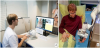
In addition to the remote care of patients, nurses are also likely to play an important role acting as patient mentors and educators. Because of the growing awareness of lifestyle-related conditions such as obesity and cardiovascular problems, nurse are also likely to play an important role in preventative healthcare where their human skills can influence the behaviours that lead to these conditions.
In addition to the remote care of patients, nurses are also likely to play an important role acting as patient mentors and educators. Because of the growing awareness of lifestyle-related conditions such as obesity and cardiovascular problems, nurse are also likely to play an important role in preventative healthcare (Figure 3)where their human skills can influence the behaviours that lead to these conditions.

Virtual Reality and Simulations Technologies
Much of nursing training and development requires hands-on experience which is not always possible, desirable or practical with human patients. Virtual Reality and Simulations (Figure 4), especially with the latest haptic technologies can provide risk-free training to large numbers of students without having to use expensive high- demand equipment such as MRI scanners. These technologies and the artificial intelligence behind them means that nurses can be trained to safely perform tasks which traditionally have been the domain of specialists such as radiographers. At a time when highly trained specialist staff are at a premium, these uses of technology could present nurses with new career opportunities.

Digital Therapeutics
Digital Therapeutics involve the use of digital technologies as a form of medicine or therapy as an alternative or a supplement to pharmaceutical drugs. These technologies support both mental and physical clinical conditions and are especially useful for rehabilitation applications. Figure 5 shows an example of a patient exercising both his mind and body in a personalised, gamified exercise based on navigating a maze. The patient controls a ball on the screen by moving his hands and arms and his movements are tracked by a sensor on

top of the screen. Not only do digital therapeutics avoid some of the issues associated with drugs and addiction/dependence, but they can be used in the patient’s own home with remote support from trained clinicians.
As well as supporting patient care, digital therapeutics can also help nurses manage the stress of their profession through the use of virtual reality or mobile meditation/mindfulness applications.
Summary and Conclusions
All professions are being impacted by disruptive digital technologies, especially by artificial intelligence and high-speed communication networks. Some of the changes in the working practices of nurses outlined have already been implemented but it is likely that the pressures created by COVID-19 will have even more profound impacts.
On balance, it is the author’s view that the nursing profession is likely to benefit from these changes because the human skills and attributes required in nursing will out-perform the capabilities of technology for many years to come.
Competing Interests
The author declare that there is no competing interests regarding the publication of this article.