


Introduction
Vitamin D is a secosteroid associated with peripheral calcium homeostasis and nervous system function, cancer, cardiovascular problems, autoimmune diseases, respiratory infections and allergies [1, 2]. Vitamin D is available in two forms, vitamin D2 from plants and D3 from animals. Both vitamin D2 and D3 are biologically inert and require activation through two hydroxylation processes involving 25-hydrooxylase (CYP2R1) and 1α-hydroxylase (CYP27B1), which are located in the liver and the kidney, respectively [2]. 1, 25-Dihydroxyvitamin D is a biologically active metabolite produced by two hydroxylation reaction steps [2].
Vitamin D is also a liposoluble pleiotropic hormone and vitamin D3 is synthesized in the skin from cholesterol precursors upon exposure to solar UVB radiation [1, 5]. Latitude affects both the quantity and quality of solar UVB reaching the earth’s surface and its role in the effective photoconversion of 7-dehydrocholesterol to previtamin D3 [2, 6]. Therefore, high latitude affects the synthesis of 25-hydroxy vitamin D (25OHD) in the skin and low sun exposure with vitamin D deficiency.
Low 25OHD levels have been associated with skeletal muscle strength and physical performance [3]. In a previous study, we also showed that 25OHD supplementation was associated with improved serum 25OHD levels and possibly improved 4-m gait speed [4].
The present study was designed to investigate the effect of latitude on 25OHD levels and muscle weights in different three latitude areas. Moreover, since muscle atrophy may be linked to long-term dexamethasone (DEX) use [7] and DEX injured C2C12 myotubesin vitro [8], we also investigated whether 25OHD treatment of DEX- induced C2C12 myotubes could prevent muscle atrophy.
Materials & Methods
Subjects and setting
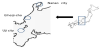
Prior to this study, approval was obtained from the ethics committee of Aichi Medical University Ethics Review Board (2017-M052) in Japan. A total of 79 healthy adults age ≥65 years were included in the study, from among adult day-care center clients in Uji city (n= 23, Kyoto, 34.53 degrees N), Eiheiji-cho (n= 30, Fukui, 36.06 degree N) and Nanaocity (n= 26, Ishikawa, 37.02 degree N). These areas were selected for the differences in their daylight hours. The annual daylight hours were maximum in Uji (1958.8 h/year), and minimum in Nanao city (1456.3 h/year) (Figure 1). Study researchers were present at the adult day-care centersto assure the proper management of safety and confidentiality of the study. The managers of the adult day-care centers invited clients to participate in the study, and subjects were enrolled from August in 2019 to February in 2020. After obtaining informed consent from a family member belonging to the same household, 26 Japanese men (age: 72.6 ± 5.9) and 53 women (age: 77.3 ± 7.3) were enrolled in the study. Physical function could be tested even in subjects who used wheelchairs.
Serum 25OHD assay
Blood was collected by venipuncture and serum 25OHD concentration was measured by Kyoto Biken Laboratories Inc. (Kyoto, Japan), Nikken Igaku Co. (Fukui, Japan) and Falco Holdings Co. (Kyoto, Japan). In the subjects, the 25OHD levels were classified as either deficient (<20) or insufficient (≥20 to 29.9).
Muscle weight
Body composition was measured using bioelectrical impedance analysis (InBody 430; InBody Japan, Tokyo, Japan), from which the skeletal muscle index (SMI) was calculated. The SMI was defined as the muscle weight of the four limbs and trunk divided by height squared in meters.
Cell culture and ATP assay
C2C12 cells obtained from the Riken Cell Bank (Ibaraki, Japan) were maintained in Dulbecco’s modified Eagle’s medium (DMEM)with 25mM glucose supplemented with 10% fetal bovine serum (Gibco, Life Technologies) and 1% penicillin-streptomycin (Sigma). The cells were then incubated at 37°C in an atmosphere of 5% CO/95% air [7]. 2 Myoblast fusion to form C2C12 myotubes was induced by culturing cells for 5 days in DMEM containing 2% horse serum (Gibco, Life Technologies). Afterward, C2C12 myotubes were treated with 50µM DEX with and without various concentrations of 25OHD for 24h. C2C12 myotubes were lysed using ATP lysis buffer, and intracellular ATP levels and protein were analyzed using ATP Detection Assay Kit - Luminescence (Cayman, USA.) and PierceTM BCA protein assay kit (Thermo fisher Scientific, USA), respectively.
Statistical analyses
Pearson’s χ2 independence test was conducted to examine the relationship between 25OHD insufficiency and deficiency in each of the three areas. The correlations between the prevalence of 25OHD deficiency and latitude, and SIM and 25OHD levels in insufficient subjects, were assessed using Pearson correlation coefficients.
Furthermore, ATP levels were expressed as mean±SEM, and the mean values of each group were compared in a one way analysis of variance and evaluated using Student’s t-test. A p-value of <0.05 was considered to be statistically significant. Analyses were carried out using SPSS 21 for Windows (IBM, Japan).
Results
Study subjects
Characteristics of the study subjects are shown in Table 1. Obesity was defined as a body-mass index (BMI) of ≥25.0 kg/m2. The prevalence of obesity determined by BMI was 38.5% in males and 35.8% in females. This showed a tendency to obesity in comparison with the standard for 65-74-year-old Japanese (21.5 - 24.9%) [9].

Serum 25OHD was classified as normal (≥30 ng/ml), insufficient (>20 to 29.9), or deficient (≤20). In the subjects of this study, the level was either deficient or insufficient. The results of a Chi-square test revealed significant differences among the three areas (χ2 = 7.919, p= 0.019, φ= 2).
Latitude and 25OHD deficiency
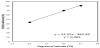
A positive association (ɤ = 0.981) was observed between degree of latitude and the prevalence of 25OHD deficiency in the three areas (Figure 2).
25OHD and skeletal muscles
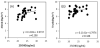
The correlation between 25OHD and the muscles of the four limbs and trunk is shown in Figure 3. Skeletal muscle of the trunk and four limbs had a weak positive correlation with 25OHD.
In the criteria of the Asian Working Group for Sarcopenia (AWGS), sarcopenia is defined as having low muscle mass (< 7.0 kg/m2 for males and <5.7 kg/m2 for females) [10]. In this study, the prevalence of sarcopenia was 25.3% (20/79) for all subjects; 26.9% (7/26) for male and 24.5% (13/53) for female day-care center clients according to the AWGS criteria. In a 5.8-year prospective study of Japanese community-dwelling elderly aged 75-79 years, the prevalence of sarcopenia was 22.0% in men and women [11]. These results suggest that in men and women, there is a difference depending on residence statuses.
25OHD reverses C2C12 myotube atrophy induced by DEX
C2C12 cells are known to differentiate into myotubes and show atrophy in the presence of DEX [6]. DEX treatment alone decreased myotube ATP significantly (Figure 4). 25OHD induced an increase in the cellular ATP concentrations in the presence of DEX in a dose- response manner (Figure 4). These results indicate that 25OHD reversed muscle atrophy in C2C12 cells.
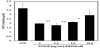
C2C12 cells were cultured with DEX for 24h with and without 2.2, 5.9 and 28.6 ng/mL of 25OHD. Lysate was subjected to ATP and protein assay. Results are presented as the mean±SEM of four experiments: **P<0.01 or *P<0.05 as compared with control groups.
Discussion
In higher latitudes areas, reduced sun exposure due to shorter daytime is associated with a higher risk of vitamin D deficiency [6, 12].
Low vitamin D has been associated with a risk of developing sarcopenia [13, 14]. In a previous study, we showed that 25OHD supplementation was associated with improved serum 25OHD levels and possibly improved 4m gait speed [4].
In this study, high latitude significantly affected 25OHD skin synthesis and muscle weight. Many previous studies have shown that herbal medicines and marine carotenoids having strong antioxidant properties enhance the prevention of DEX-induced injury of C2C12 myotubes [8, 15]. Vitamin D mitigates reactive oxygen production and prevents muscle damage [16]. In our study, 25OHD was also shown to prevent DEX-induced muscle atrophy at the insufficient concentration (20-30ng/mL). These results suggest that 25OHD has beneficial effects on oxidative stress in skeletal muscles and muscle regeneration following injury.
These facts indicate the need to adopt active sunbathing in day-care services in winter or at institutions located at higher latitudes.
Changes in dietary foods also affect vitamin D status. In a previous study, we showed that 9 month intake of 25OHD increased serum 25OHD within the insufficient and sufficient levels [17]. Thus, daily oral doses of vitamin D supplementation can also help to maintain serum 25OHD concentration.
Conclusion
The findings of this study indicate the need to actively adopt sunbathing in day-care services in winter or at institutions located at higher latitudes to prevent sarcopenia.
Competing Interests
The authors declare that they have no competing interests.
Author's Contribution
Study conception, design, analysis, interpretation of data, and drafting of the manuscript: Prof. Noboru Hasegawa
Data acquisition and proofreading of the manuscript: Dr. Nobuko Shimizu, Dr. Takako Yamada, Mr. Yoshihito Tsubouchi, Ms. Miyako Mochizuki, Ms. Mayumi Kato, Mr. Masashi Yoshitake and Ms. Ayako Yokota.
References
- Christakos S, Dhawan P, Verstuyf A,Verstuyf A, Verlinden L, et al. (2016) Vitamin D: metabolism, molecular mechanism of action, and pleiotropic effects. Physiol Rev 96: 365-408. View
- Sarfraz Z (2015) Power of Vitamin D (3rd edition): A Vitamin D Book that Contains the Most Scientific, Useful and Practical Information About Vitamin D - Hormone D. CreateSpace Independent Publishing Platform, USA.
- Kamwa V, Hassan-Smith ZK (2019) The inter-relationship between marginal vitamin D deficiency and muscle. Curr Opin Endocrinol Diabetes Obes 26: 322-328. View
- Christakos S, Dhawan P, Verstuyf A, Verlinden L, Carmeliet G, et al. (2016) Vitamin D: metabolism, molecular mechanism of action, and pleiotropic effects. Physiol Rev 96: 365-408. View
- Webb AR, Kline L, Holick MF (1988) Influence of season and latitude on the cutaneous synthesis of vitamin D3: exposure to winter sunlight in Boston and Edmonton will not promote vitamin D3 synthesis in human skin. J Clin Endocrinol Metab 67: 373-378. View
- Schakman O, Gilson H, Thissen JP (2008) Mechanisms of glucocorticoid- induced myopathy. J Endocrinol 197: 1-10. View
- Wang M, Jiang R, Liu J, Xu X, Sun G, et al. (2021) 20(s)-ginseonside- Rg3 modulation of AMPK/FoxO3 signaling to attenuate mitochondrial dysfunction in a dexamethasone-injured C2C12 myotube-based model of skeletal atrophy in vitro. Mol Med Rep 24: 620-629. View
- Ministry of Health, Labour and Welfare of Japan (2020) The dietary reference intakes for Japanese.
- Chen LK, Liu LK, Woo J, Assantachai P, Auyeung TW, et al. (2014) Sarcopenia in Asia: consensus report of the Asian Working Group for Sarcopenia. J Am Med Dir Assoc 15: 95-101. View
- Kitamura A, Seino S, Abe T, Nofuji Y, Yokoyama Y, et al. (2021) Sarcopenia: prevalence, associated factors, and therisk of mortality and disability in Japanese older adults. J Cachexia Sarcopenia Muscle 12: 30-38. View
- Ostkamp P, Salmen A, Pignolet B, Gorlich D, Andlauer TFM, et al. (2021) Sunlight exposure exerts immunomodulatory effects to reduce multiple sclerosis severity. Proc Natl Acad Sci U S A 118: 1-12. View
- Chang WT, Wu CH, Hsu LW, Chen PW, Yu JR, et al. (2017) Serum vitamin D, intact parathyroid hormone, and Fetuin A concentrations were associated with geriatric sarcopenia and cardiac hypertrophy. Sci Rep 7: 40996. View
- Kupisz-Urbanska M, Płudowski P, Marcinowska-Suchowierska E (2021) Vitamin D deficiency in older patients-Problems of sarcopenia, drug interactions, management in deficiency. Nutr 13: 1247-1257. View
- Zhiyin L, Jinliang C, Qiunan C, Yunfei Y, Qian X, et al. (2021) Fucoxanthin rescues dexamethasone induced C2C12 myotubes atrophy. Biomed Pharmacotherap 139: 111590-111598. View
- Latham CM, Brightwell CR, Keeble AR, Munson BD, Thomas NT, et al. (2021) Vitamin D promotes skeletal muscle regeneration and mitochondrial health. Front Physiol 12: 660498-660518. View
- Hasegawa N, Mochizuki M, Yamada T (2019) Vitamin D3 supplementation improved cognitive function in diabetic elderly patients with good glycemic control in Japan: A pilot study. Int J Nurs Clin Pract 6: 311-314. View