


Background
Cancer chemotherapy or radiation therapy has shifted from inpatient to outpatient settings. Effective home-based medical care for breast cancer survivors has placed ever-greater emphasis on survivorship care to maximize women’s quality of life and the relief of family members [1]. Exposure of hospital workers to anti-neoplastic drugs in the work environment has been described [2-4]. Thus, exposure of family members to anticancer drugs is a serious concern. However, surface contamination on toilet surfaces and removal methods are not clear.
Breast cancer is the cancer that has the largest effect on procreation in women of reproductive age, and its incidence is increasing at an alarming rate. In the US, 1 in every 8 women will develop breast cancer during her life [5]. Chemotherapy plays an important role in breast cancer treatment, and the most recommended chemotherapy treatments for breast cancer in the current guidelines include cyclophosphamide (CPA). CPA is classified as a group 1 agent (carcinogenic to humans) by the International Agency for Research on Cancer and in pregnancy category D by the US Food and Drug Administration Center for Drug Evaluation and Research [6].
CPA was detected in saliva immediately after the chemotherapy and exponentially reduced with the passage of time (half-life of 6.51 ± 1.48 h) [7]. CPA was detected at levels of 0.03-7.34 ng/cm2 in 8 of the 12 wipe samples obtained from the homes of the patients administered CPA [8].
This study provides an insight into the biological contamination with CPA in the excretion environment within the hospital and at home. Another aim is to document protective measures to minimize CPA-induced surface contamination risk using toilet tissues and commercial wipes.
Materials and Methods
Wiping materials
Ten squares of the toilet tissue, 10 squares of the toilet tissue soaked with water, a thin commercial cloth toilet wipe (0.0625 mm) containing ethyl alcohol, isopropyl alcohol and benzalkonium chloride (Kobayashi Pharmaceutical Co., Osaka, Japan) and a thick commercial cloth toilet wipe (0.425 mm) containing alkylglycoside, glycolethers and an anti-bacterial agent (Kao Co., Tokyo, Japan) were used, with a size of 10 cm x 10 cm.
CPA on the surface and back side of the toilet seat
Five patients (age: 38.0 ± 20.5) whose ages suggested the possibility of the childcare were administered CPA (560-700mg) and thereafter immediately introduced to the bathroom in the hospital. After urination, the lid of the toilet seat was closed, and excreta were drained twice according to the Japanese guideline [9]. The sampling sheets that were preliminarily affixed on the surface and back of the toilet seat for 5 patients were collected using a disposable plastic glove and analyzed for CPA using LC-MS/MS after the extraction with acetic acid (Shionogi Analysis Centre Co., Ltd., Japan).
Ethical approval
Ethical approval for this study was obtained from Ishikawa Nursing University (No. 561).
Wiping ability to eliminate experimental contamination
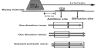
The ability of wiping to eliminate experimental contamination was evaluated in a biological safety cabinet using 4 commercially available materials (Figure 1). CPA (EndoxanTM for injection, Shionogi & Co., Ltd., Osaka, Japan) was diluted with saline and 50 µL (1 µg) was added to a circle with a radius of 2 cm and spread on a 10 cm x 10 cm sampling sheet (Addition site). Another sampling sheet was set next to the additional site (Diffusion site). A wiper to test wiping effectiveness was placed 10 cm to the left of the addition site and a weight of 500 g was put on the wiping material and the weight was moved in 3 different wiping patterns at speed of 1cm/sec so that the wiping material was not torn. The residual CPA in the addition and diffusion sites were analyzed (Shionogi Analysis Centre Co., Ltd., Japan).
Statistical analysis
Results are expressed as the mean ± SD. The differences between wiping effectiveness were evaluated using a one-way analysis of variance. A p-value of < 0.05 was considered to be statistically significant. Analyses were carried out using SPSS 21 for Windows (IBM, Japan).
Results and Discussion
Surface wipe testing on the surface and back side of the toilet seat
Average CPA on the surface and back side of the toilet seat for the five subjects was 15.2 and 121.2 ng, respectively. A previous study found that the total amount of CPA excreted in the urine during the 48 h post-administration period was 24.3% of the total administered dose in breast cancer patients [11]. Patients and their family members also need to be careful of contamination of the toilet environment. Wiping off the back of the toilet seat is necessary after the use of the restroom, and makes it possible to reduce the risk of exposure to CPA for patients, their family members and healthcare workers.
Wiping effectiveness with experimental contamination
At the addition site, the residual CPA was less than 5ng after wiping in one direction (once) with all materials (Figure 2A). With the toilet paper soaked with water and the thick cloth, it was lower than the detection limit (0.04ng/mL). After wiping in one direction (twice) with the thin cloth and after wiping of outward and back (once) with the thin and thick cloths, recontamination of CPA was detected. In the diffusion site, the residual CPA was less than 10 ng except when using the thin cloth after wiping in one direction (once) (Figure 2B).
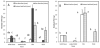
Wiping in one direction (once) was effective with all materials, but CPA migrated to the neighbouring site when the commercial thin cloth was used. The high propensity for healthcare surfaces to be re-contaminated with bacteria following initial wiping suggests that a “One wipe, One surface, One direction, Dispose” policy should be implemented and rigorously enforced [10]. When cleaning, protective measures are necessary to minimize exposure risk for family members, and wiping using 10 squares of toilet tissue soaked with water in one direction is an easy and simple method.
Breast cancer is the most diagnosed cancer in women worldwide and it accounts for 29% of all new cancers in women. Its onset age is also younger than that of other cancers. It is important for patients and their family members to protect themselves from unaltered CPA.
Conclusion
These findings show that the wiping off the back of the toilet seat is necessary after use of the restroom. When cleaning, protective measures are necessary to minimize exposure risk for family members, and wiping using 10 squares of toilet tissue soaked with water in one direction (once) is an easy and simple method.
Competing Interests
The authors declare that they have no competing interests.
Acknowledgements
Dr. Hasegawa was responsible for the study conception, design, and analysis, interpretation of data, and
drafting of the manuscript.
Dr. Makino was responsible for the study conception, design, data acquisition
and proof-reading of the manuscript.
Ms. Nakajima was responsible for data acquisition and proof-reading of the
manuscript.
Ms. Matsumoto was responsible for data acquisition and proof- reading of the manuscript.
Ms. Takizawa was responsible for data acquisition and proof-reading of the manuscript.
Ms. Imakata was responsible for data acquisition and proof-reading of the manuscript
References
- Cheng KKF, Lim YTE, Koh ZM, Tam WWS (2017) Home-based multidimensional survivorship programs for breast cancer survivors. Cochrane Database Syst Rev 8:1-116. View
- Kromhout H, Hoek F, Uitterhoeve R, Huijbers R, Overmars RF, et al. (2000) Postulating a dermal pathway for exposure to antineoplastic drugs among hospital workers. Applying a conceptual model to the results of three workplace surveys. Ann Occup Hyg 44: 551-560. View
- Meijster T, Fransman R, Veldhof R, Kromhout H (2006) Exposure to antineoplastic drugs outside the hospital environment. Ann Occup Hyg 50: 657-664. View
- Valero-Garcia S, Poveda-Andes JL (2018) Hazardous drugs levels in compounding area surfaces of Hospital Pharmacies Services: multicentric study. Farm Hosp 42: 152-158. View
- Kelsey JL (1993) Breast cancer epidemiology: summary and future directions. Epidemiol Rev 15:256–263. View
- Connor TH, McDiarmid MA (2006) Preventing occupational exposures to antineoplastic drugs in health care settings. CA Cancer J Clin 56: 354–65. View
- Makino T, Hasegawa N, Takizawa R, Matsumoto C, Wagatsuma T, et al. (2020) Suggestions for protecting breast cancer patients receiving outpatient chemotherapy and their families against the exposure risk from salivary Cyclophosphamide. Int J Nurs Clin Pract 7:320-323. View
- Juma FD, Rogers HJ, Trounce JR. (1979) The kinetics of salivary elimination of cyclophosphamide in man. Br J Clin Pharmacol 8: 455-458. View
- Kanda K, Hirai K, Iino K, Nomura H, Yasui H, et al. (2017) Salient features and outline of the Joint Japanese Guidelines for Safe Handling of Cancer Chemotherapy Drugs. Asia Pac J Oncol 4: 304-312. View
- Yuki M, Sekine S, Takase K, Ishida T, Sessink, PJM (2013) Exposure of family members to antineoplastic drugs via excreta of treated cancer patients. J Oncol Pharm Pract 19: 208-217. View