


Introduction
While continued advancement in healthcare have significantly improved patient outcomes, curriculum design and integration innovation are significantly lacking.1 College students in the United States are challenged with several social and educational disparities and inequities that impacts their ability to not only be accepted into competitive programs, but also their ability successfully graduate these programs [1, 2]. Some literature has offered educators with applicable strategies to address these inequities in higher education, however, healthcare curriculum faces unique challenges for providing inclusive instruction, while meeting the professional demands and expectations [3]. Prelicensure nursing education needs immediate attention to revise and improve delivery that offers an inclusive and safe learning environment [1, 3]. In recent years literature on interprofessional education (IPE) and the value of effective collaboration in clinical practice has been well documented [4, 5, 6]. IPE guidelines have continued to develop with recommendations from the Interprofessional Education Collaborative (IPEC) [7], the World Health Organization (WHO)8 and the Centre for the Advancement of Interprofessional Education (CAIPE)9. However, IPE research has mainly been limited, and has not been evaluated as an effective method for improving inclusivity in student learning [4, 10, 11].
Interprofessional education is markedly separate from multi- professional education, where students learn in a side-by-side manner, but without learning through collaborative interaction across professions [10, 11]. IPE aims to develop teamwork, collaboration, and communication skills in an environment where students of multiple professions learn with, from and about each other through interaction.5 Although many previous studies have demonstrated positive outcomes of IPE, IPE remains rarely integrated as a core concept within prelicensure registered nursing education curricula in the U.S. [5, [12-15]. Further, Macías-Inzunza and colleagues identified that IPE is lacking globally within healthcare curricula, and they found no articles that addressed early inclusion of IPE in medical or nursing curricula [16].
Therefore, this project aimed to address two distinct gaps in IPE literature. The first aim was to provide IPE curricula development strategies targeted at improving inclusive learning environments for prelicensure registered nursing students. The second aim evaluated the impact of early implementation of IPE on nursing students’ perceptions related to professional socialization, readiness to function as part of a clinical team and teamwork collaboration skills. This project provided a methodical approach regarding the development of an innovative IPE curriculum, while addressing current limitations in IPE for prelicensure registered nursing faculty. The curriculum was designed with best practice guidelines, used multiple methods of instruction over several weeks and consisted of interactions between students from three healthcare professions: nursing, pharmacy, and medicine.
Methods
Curriculum development
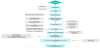
For this project, an innovative IPE curriculum was designed addressing several limitations from previous studies. Firstly, the prelicensure registered nursing students interacted with students from two other professions throughout the course, doctoral pharmacy, and medical doctor students. To best meet all learners’ needs, preferences and provide a safe, inclusive learning environment using a multi- method approach to instruction was critical. The curriculum design included visual, kinesthetic auditory as well as reading/writing strategies to meet IPE core objectives and competencies. Additionally, the curriculum design prioritized a continuous learning model that allowed student teams to meet frequently, consistently, and continuously over a 10-week period following IPEC’s core competencies and CAIPE’s Guidelines on Interprofessional Practice and Education guided the curriculum objectives. The unique 10- week structure allowed student teams to develop stronger teamwork dynamics and better mirrors the mechanics of an interprofessional team within clinical practice. The curriculum was delivered to first year prelicensure registered nursing during their initial nursing foundation’s course. Class size, student-to-faculty ratios, availability of simulation laboratory equipment, technology resources, cost effective approaches, individual program schedules and logistical measures were discussed during the initial planning phase. A final syllabus was created and approved by the School of Nursing. The project was then approved by the Institutional Revenue Board as a quality improvement project by the university. A detailed flow chart on phases of course planning and integration can be found in Figure 1. Methods of instruction included interactive lectures, case studies, peer teaching, discussion boards, and one high-fidelity simulation and are discussed in detail below.
Interactive Lectures: During the interactive lectures, students engaged in collaborative learning activities that evaluated current knowledge of various healthcare professions, encouraged team collaboration, and facilitated teambuilding relationships. Lectures were designed to be interactive utilizing game style learning including ice breaker discussions, team jeopardy, class polls and virtual medical and non- medical escape room exercises. As part of the learning activities students were expected to use each other’s strengths, knowledge, backgrounds, as well as specific nursing and pharmacy priorities to work through problems, develop a plan of care and evaluate outcomes.
Case Studies/Peer Teaching: Case study assignments were designed to foster professional socialization, encourage collaboration, and demonstrate leadership skills. During case study activities students were assigned to small groups, consisting of both nursing and pharmacy, presented with a patient, and tasked with working through presented problems, prioritization, and treatment plans. After which, two groups presented their findings in a peer teaching exercise.
Discussion Board: Four online, faculty-guided discussion boards were assigned throughout the course. Discussion board assignments focused on sensitive healthcare topics from the perspective of interprofessional care including medical misinformation, implicit bias, personal ethics in healthcare and social media in healthcare. Students were presented with current event issues, related articles from various perspectives, articulate their point-of-view, and respond to posts from both nursing and pharmacy students.
High-fidelity Simulation: An interprofessional focused high- fidelity simulation was written and involved nursing, pharmacy, and medical students. Simulation groups consisted of five to six students from all three professions. Learning objectives included closed loop communication, provider role understanding, and responsibility and collaborative patient plan of care development throughout the scenario.
Measures of IPE Impact
A pre and posttest design was used to evaluate nursing students’ perceptions related to professional socialization, readiness to function as part of a clinical team and teamwork collaboration skills using two validated instruments: the Interprofessional Socialization Valuing Scale (ISVS) and the Assessment of Interprofessional Team Collaboration Scale (AITCS). The two instruments are discussed in detail below. The ISVS examines a learner’s self-perceived readiness to function as part of an interprofessional team through a self-reported survey on a 7-point Likert scale [17]. Higher scores suggest a stronger attitude related to interprofessional socialization and valuing, and a greater perception of readiness to effectively work as part of a team [17]. The AITCS measures overall interprofessional collaboration skills between team members [18]. Inferential statistics were used to compare pre and posttest scores. A paired-samples t-test was used to evaluate the ISVS results, while a sign test was used to analyze the AITCS scores. Descriptive statistics were used to summarize demographic data.
Results
In total, 67 prelicensure nursing students participated in this project. Of the participants, most identified as young adult, Asian females, further demographics can be found in Table1.

Using a paired-samples t-test to analyze the ISVS scores, results showed there was a statistically significant mean increase of 10.3 (95% CI, 8.99, 11.58) points, t (66) = 15.89, p < .001, d = 5.30 from pre and posttest scores. Results from the AITCS scores using a sign test also showed statistically significant median increases in total collaboration scores ( Mdn. = 7.0) from the start of the course ( Mdn. = 68.0) as compared to after the IPE curriculum ( Mdn. = 76.0), z = 7.81, p < .001 (Table 2).
Limitations
While there were statistically meaningful results in student perceptions related to readiness to function within a clinical, professional socialization and team collaboration skills, this project did not specifically examine clinical performance. Therefore, further research on how perceived improvements of interprofessional collaboration skills transcends into clinical practice is needed. It must also be noted that data was obtained from a single university where student demographics and the location of the university may have influenced results.
Discussion
While IPE benefits have been widely accepted, the standardized nature of IPE instruction is lacking, and IPE has not yet been evaluated as an effective method for inclusive learning designed for nursing education. This project addresses the timely discussion centered around improving higher education through methods of inclusive
learning that address the inequities and disparities experienced by students of higher education through the integration of IPE. The innovative design of the curriculum provided valuable insight on the positive impact of using multiple methods of instruction to meet all learner needs, offering a safe and inclusive learning environment. Additionally, the unique structure of the curriculum shed light on the benefits for learners when incorporating interprofessional learning activities over a longer period of time, rather than a single event session the consist of students from multiple professions. Clinical teams in the workplace are not limited to only two healthcare professions, rather clinical teams are comprised of multiple healthcare professions. Therefore, it is important to examine whether IPE that engages students in teams that more closely resembles a typical clinical team dynamic improves learning outcomes. Further, in practice clinical team dynamics are developed over time and while student learners may benefit from a single IPE session, whether IPE that offers consistent team interactions offers more beneficial learning opportunities should be considered. This project addresses critical gaps in recent literature as it pertains to prelicensure registered nursing education. With almost no specific guidelines directed at prelicensure registered nursing faculty regarding when in registered nursing education and within which courses IPE is most appropriate, this project demonstrated how early implementation of IPE during the initial nursing foundational courses is maybe a beneficial time for IPE content introduction.
Implications
Healthcare professionals are expected to collaborate with numerous specialties and disciplines, and nurses are often leading the charge in this arena. As such, preparing professional nurses to feel confident in their communication and collaboration skills may not only help reduce medical errors, improve patient safety and better patient outcomes, but effective, early IPE in prelicensure registered nursing education may also help to alleviate some of the stress and anxiety experienced in the first year of professional practice for registered nurses in the U.S. [19]. Improvements in healthcare education are critical and have a direct impact on the overall quality of patient care delivered from future clinical providers [7, 8, 20].
Conclusion
Many institutions, including healthcare professional organizations, licensing authorities, hospitals, healthcare systems, and healthcare education programs within the U.S. and worldwide support the advancement and integration of interprofessional education across all healthcare fields, especially in prelicensure registered nursing education [7, 8, 20]. Guidelines aimed at exploring effective implementation strategies, curriculum design, timing of introduction and best practice evaluation methods targeted for prelicensure registered nursing learners are needed. This project offers an effective IPE curriculum model that offers multiple learning opportunities for developing critical interprofessional collaboration skills, as well as improving inclusive and safe learning environments. Future projects aimed at evaluating the impact of IPE in clinical practice would be helpful, but this project addressed critical gaps in literature and facilitates the development of best practice guidelines related to nursing education.
Competing Interests
The author declares that she has no competing interest.
References
- Richard JR, Taylor ZW (2018) Race, Equity, and the Learning Environment: The Global Relevance of Critical and Inclusive Pedagogies in Higher Education Eds. by Frank Tuitt, Chayla Haynes, and Saran Stewart (review). Review of Higher Education 41: 493-496. View
- Thompson D, Brewster S (2022) Inclusive Placement Learning for Diverse Higher Education Students: Anxiety, Uncertainty and Opportunity. Educational review (Birmingham) ahead-of-print.ahead-of-print: 1-19. View
- L'Ecuyer KM (2019) Clinical education of nursing students with learning difficulties: An integrative review (part 1). Nurse Educ Pract 34: 173-184.
- Burford B, Greig P, Kelleher M, Merriman C, Platt A, et al. (2020) Effects of a single interprofessional simulation session on medical and nursing students' attitudes toward interprofessional learning and professional identity: a questionnaire study. BMC Med Educ 20: 65. View
- Guraya SY, David LR, Hashir S, Mousa NA, Al Bayatti SW, et al. (2021) The impact of an online intervention on the medical, dental and health sciences students about interprofessional education; a quasi-experimental study. BMC Med Educ 21: 457. View
- Oosterom N, Floren LC, Ten Cate O, Westerveld HE (2019) A review of interprofessional training wards: Enhancing student learning and patient outcomes. Med Teach 41: 547-554. View
- Interprofessional Education Collaborative (IPEC) (2016) Core competencies for interprofessional collaborative practice: 2016 update. Washington, DC: Interprofessional Education Collaborative.
- Institute of Medicine (IOM) (US) (2015) Redesigning continuing education in the health professions. Washington, DC: The National Academies Press.
- CAIPE (2021) Interprofessional Education Handbook: For Educators and Practitioners incorporating Integrated Care and Values-based Practice, (Ford, J., Gray, R.). CAIPE. Published February 8, 2021. View
- O'Leary N, Salmon N, O'Donnell M, Murphy S, Mannion J (2022) Interprofessional education and practice guide: profiling readiness for practice-based IPE. J Interprof Care. 22: 1-6. View
- Reeves S, Palaganas J, Zierler B (2017) An Updated Synthesis of Review Evidence of Interprofessional Education. J Allied Health 46: 56-61. View
- Powell B, Jardine KD, Steed M, Adams J, Mason B (2020) Enhanced nursing self-awareness and pharmacotherapy knowledge-base: peer-teaching and nursing/pharmacy interprofessional education. Med Educ Online 25: 1814551. View
- Leithead J 3rd, Garbee DD, Yu Q, Rusnak VV, Kiselov VJ, et al. (2019) Examining interprofessional learning perceptions among students in a simulation-based operating room team training experience. J Interprof Care 33: 26-31. View
- Granheim BM, Shaw JM, Mansah M (2018) The use of interprofessional learning and simulation in undergraduate nursing programs to address interprofessional communication and collaboration: An integrative review of the literature. Nurse Educ Today 62: 118-127. View
- Vandergoot S, Sarris A, Kirby N, Ward H (2013) Exploring undergraduate students' attitudes towards interprofessional learning, motivation-to-learn, and perceived impact of learning conflict resolution skills. J Interprof Care 32: 211-219. View
- Macías Inzunza L, Rocco Montenegro V, Rojas Reyes J, Baeza Contreras M, Arévalo Valenzuela C, et al. (2020) Formation in Interprofessional Education in Nursing and Medical Students Globally. Scoping review. Invest Educ Enferm 38: e6.
- King G, Orchard C, Khalili H, Avery L (2016) Refinement of the Interprofessional Socialization and Valuing Scale (ISVS-21) and Development of 9-Item Equivalent Versions. J Contin Educ Health Prof 36: 171-177. View
- Orchard C, Pederson LL, Read E, Mahler C, Laschinger H (2018) Assessment of Interprofessional Team Collaboration Scale (AITCS): Further Testing and Instrument Revision. J Contin Educ Health Prof 38: 11-18. View
- Washington VL, Zakrajsek A, Myler L, Seurynck K, Holt S, et al. (2022) Blending interprofessional education and simulation learning: A mixed- methods study of an interprofessional learning experience with nursing and occupational therapy students. J Interprof Care 36: 276-281. View